
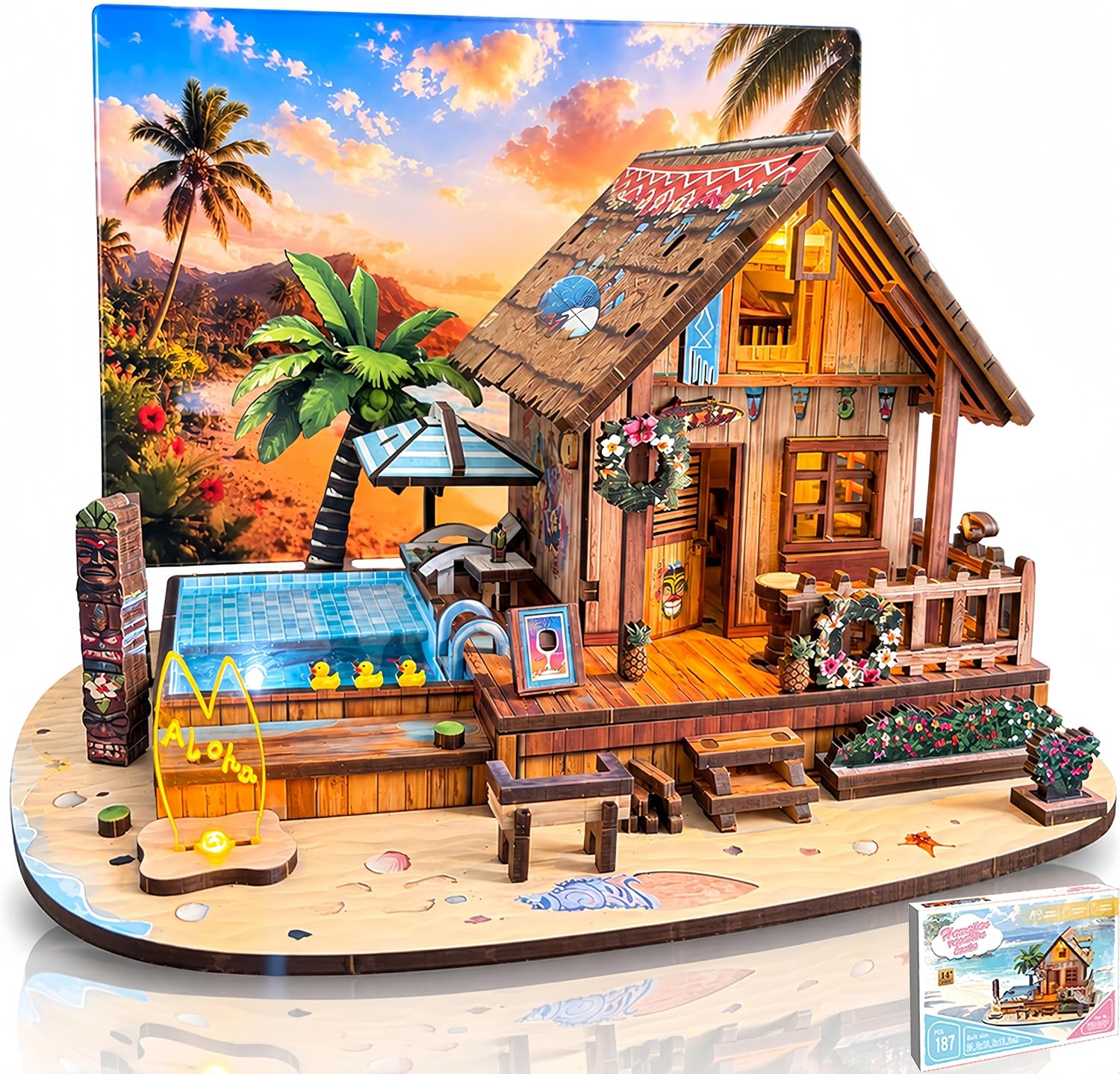
3D wooden puzzles are meant to be solved, but they are not all equally difficult. A first-time builder may find the opening steps unfamiliar because flat pieces must be understood as parts of a three-dimensional structure. After the first wall, roof or mechanical section takes shape, the process usually becomes easier to read.
The challenge comes from observation and patience more than special technical knowledge. You identify a piece, check its direction, make the connection and compare the result with the instructions. Choosing a model with a subject you like and a manageable set of features gives a beginner the best start.
Are 3D wooden puzzles difficult for beginners?
Beginners can successfully build a 3D wooden puzzle when they allow enough time and follow the instructions in order. The experience differs from a flat jigsaw puzzle. Instead of matching an image, you are assembling a small structure, so the orientation of tabs, slots and layers matters.
The first few steps often feel the slowest. You are learning how firmly the pieces connect and how the diagrams represent front, back, left and right. That learning carries forward. By the middle of the project, many builders have developed a repeatable rhythm.
A beginner-friendly choice usually has:
- a subject with recognizable parts, such as a house or landmark;
- clear visual milestones, such as a floor, wall and roof;
- a piece count that fits the time you want to spend;
- enough workspace to keep parts organized; and
- features you are excited to complete, rather than features you feel obliged to rush.
What makes a wooden model more challenging?
Piece count
A larger piece count generally creates a longer sequence. It does not automatically make every connection more difficult. The 595-piece Big Ben Clock Tower, for example, uses repeated architectural details that reward consistent attention.
Small decorative details
Miniature scenes use small parts to create railings, furniture, plants and landscape features. These details make the completed model feel alive, but they require a clean workspace and careful handling.
Similar-looking pieces
Two parts can look almost identical while facing opposite directions. Checking the printed number and diagram before assembly is faster than correcting the wrong orientation later.
Lighting
LED models combine wooden assembly with a lighting step. Follow the included instructions, keep wires away from connection points and test the light at the recommended stage. The lighting is part of the reward, not a reason to hurry.
Moving parts
Mechanical wooden models ask several connected pieces to work together. The Paddle Steamer uses a manual axle to turn its paddle wheels. A moving section should be aligned and tested as the instructions direct before surrounding parts make it harder to reach.
Tall or layered structures
Architecture and fantasy models may build upward in repeated levels. A stable, flat base becomes important as the structure gains height. The Fantasy Castle also adds a rotating section and multicolor lighting to its 433-piece design.
How to make your first build easier
Prepare the workspace
Use a flat table with bright, even light. Keep drinks away from the pieces and leave enough room to rotate the model without lifting it. A shallow tray can hold the small parts required for the current step.
Read ahead before pressing pieces together
Look at the current diagram and the next one. The following step often reveals which side of a part must remain accessible. Dry-align pieces first when the orientation is not immediately clear.
Remove parts only when needed
Leaving later parts in their sheets preserves their labels and reduces clutter. When a piece is required, separate it carefully according to the kit instructions and inspect the edges before assembly.
Build in short, complete stages
Fatigue leads to missed labels and reversed pieces. Stop after a stable section instead of pushing through several uncertain steps. A wooden model should be a focused activity, not a race.
Do not force a connection
If a piece does not fit as expected, check its number, direction and the pieces around it. Excess force can damage a tab or make a later correction difficult. The correct connection should match the diagram and support the next stage.
Keep the final display in mind
Knowing where the finished model will go can make the project feel more purposeful. Illuminated houses work well where their windows can be seen after dark, while a tall landmark needs clear vertical space.
Choosing your first 3D wooden puzzle
For a first build, start with the type of finished object you would enjoy seeing at home. A miniature house offers familiar architecture and visible stages. The 187-piece Hawaiian Beach House builds a tropical scene with warm lighting. The 198-piece Winter Cabin adds an opening roof and an illuminated interior.
If you already enjoy model building, mechanical projects or detailed crafts, you may prefer a more substantial first choice. The Paddle Steamer offers visible manual movement, while Big Ben and the Fantasy Castle provide longer architectural builds.
Piece count can help you compare scope, but it should not be the only filter. Use the complete 3D wooden puzzle comparison to review subject, lighting, movement and display style together.
The right first puzzle feels interesting enough to finish and clear enough to approach one step at a time. When the subject matters to you, patience is easier to find.
For a model-by-model starting point, see our guide to the best 3D wooden puzzles for beginners.
Frequently asked questions
Do 3D wooden puzzles require glue?
Requirements can vary by kit. Check the product information and follow the instructions supplied with the specific model rather than assuming every wooden puzzle assembles in the same way.
What should I do if a piece does not fit?
Stop and check the part number, orientation and surrounding steps. Avoid forcing the connection. Re-reading the current and next diagram often reveals whether the piece is reversed or belongs later.
Are 3D wooden puzzles suitable for teenagers?
Suitability depends on the model, the builder’s experience and any age guidance on the product listing. Detailed assembly, small parts and electrical components may require adult supervision.
Is a 200-piece wooden puzzle easy?
Piece count alone does not define difficulty. A model near 200 pieces can still include small scenery, lighting or layered construction. Compare the features as well as the number.
Which Astshun&co model should a beginner choose?
The Hawaiian Beach House and Winter Cabin have confirmed counts below 200 pieces and recognizable house structures. The best choice is the subject and feature set the builder is most motivated to complete.