
Battery or USB power changes where an LED wooden puzzle can live after assembly. A battery-powered model offers more freedom to place it away from an outlet, but you must be able to reach and replace its batteries. A USB-powered model avoids battery changes, but needs a suitable power connection and a clear path for its lead. Neither type is automatically brighter, safer or better. The lighting effect, switch and assembly sequence vary by kit, so confirm the current listing and supplied instructions before choosing.
If you are shopping for a gift, start with the recipient's intended display spot. A bookshelf without a nearby power source may favor a battery design. A desk near an outlet may make USB convenient. This guide focuses on that practical decision, using verified examples from the Astshun&co 3D wooden puzzle collection. It is a buying and display guide; for a light that has stopped working, use our separate LED troubleshooting checklist.
What is the practical difference between battery and USB lighting?
Both systems can illuminate a finished miniature, but they create different routines. With batteries, you can position the model without running a visible cord to a power source. That helps when a shelf is in the middle of a room or when a display is moved for a holiday table. The trade-off is access: you will eventually need to operate the switch and replace batteries of the specified type. A decorative cabinet that hides the battery compartment completely can become inconvenient.
USB lighting requires a compatible power connection according to the kit's instructions. Think about where the cable leaves the model, whether it can pass behind a shelf without being pinched, and how you will turn the lights on or off. Do not assume that a USB description means a power adapter is included or that any adapter is appropriate. Check the current product contents and manual. Similarly, do not assume a battery-powered kit includes batteries.
The connector does not tell you the color or behavior of the LEDs. A warm window glow and color-changing effects are different design choices, not inherent traits of batteries or USB. Compare the finished scene you want to see before comparing power alone.
Which Astshun&co models show the two options?
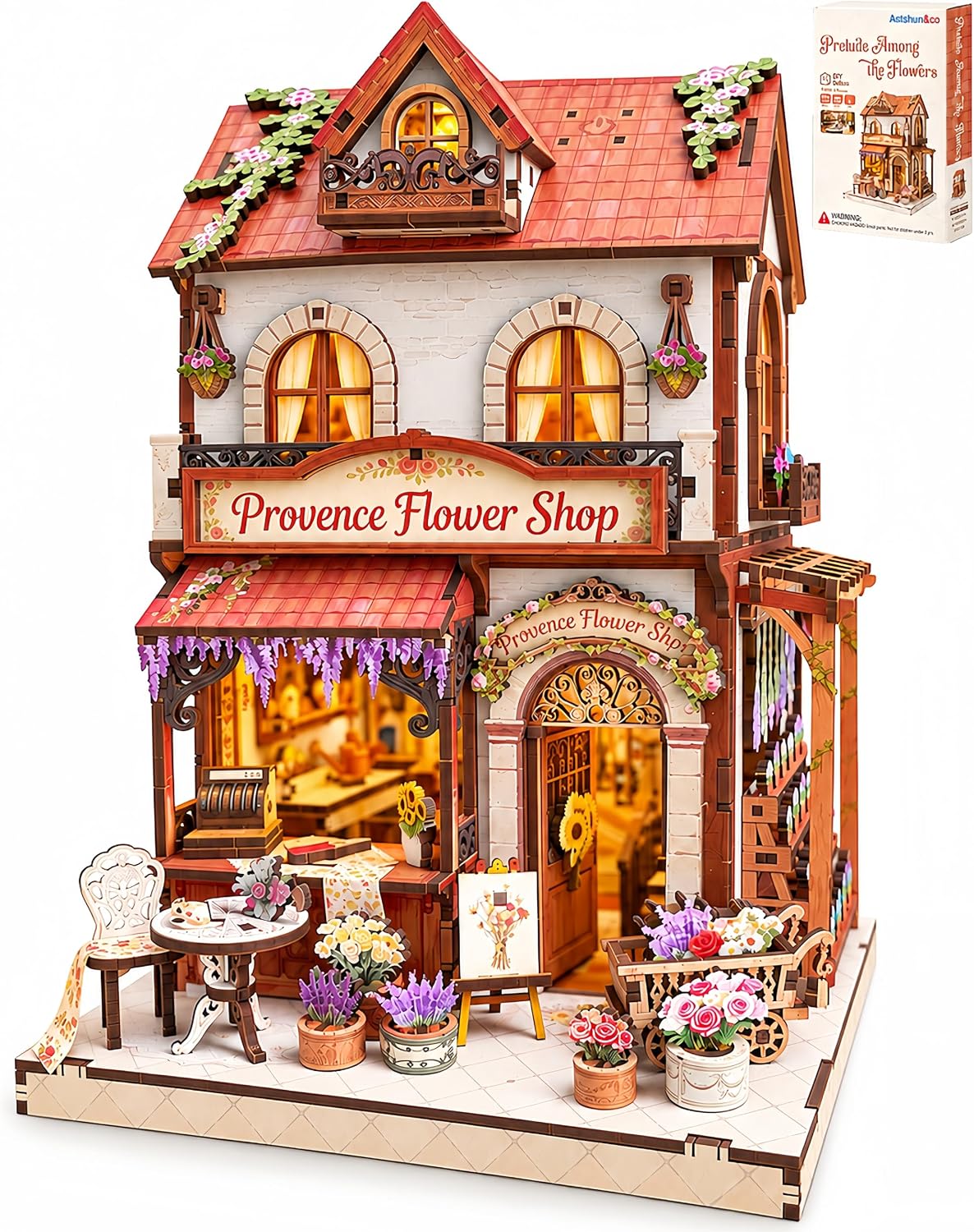
The Provence Flower Shop is a confirmed battery example. Its current product information describes warm LED lighting with a touch switch, powered by two AAA batteries that are not included. Its flowers, arched windows and interior details make it a freestanding miniature house. The battery arrangement may suit a shelf where a trailing cord would be awkward, provided you leave room to reach the battery compartment and touch control.
The Magic Carriage is a confirmed USB example. Its product information specifies USB-powered LEDs, color-changing mushroom lights and a warm campfire glow. The carriage, cat wizard and portal form a wider fantasy scene, so check both the shelf footprint and the cable path. A USB lead is especially relevant if you intend to light the scene regularly rather than only for occasional viewing.
The Seaside Cabin is another USB-powered model, with warm LED lighting described as connected after assembly. It illustrates why the build sequence matters: a general tip about wiring before closing a model should not override this kit's own instructions. The Winter Cabin has warm LED lighting and an opening roof, but the available product summary does not establish a power type. Check its current listing or manual instead of guessing from its appearance.
| Display question | Battery-powered example | USB-powered examples |
|---|---|---|
| Where can it sit? | Away from an outlet, if battery access remains clear | Near a suitable power source with a safe cable route |
| What will you maintain? | Batteries of the specified type | Access to the connector and cable |
| Which Astshun&co model is verified? | Provence Flower Shop: two AAA batteries, not included | Magic Carriage and Seaside Cabin: USB-powered LEDs |
These examples are not a ranking of products. Their themes and lighting effects differ as much as their power sources. Our miniature house gift guide helps compare the scenes themselves.
How do you plan a shelf or desk before buying?
Measure the available width, depth and height against the assembled dimensions shown in the current listing. Leave more room than the bare footprint if doors, a roof or scenery need clearance. On a bookshelf, decide whether the model should sit beside books or between them; a freestanding miniature should not be treated as a narrow book-nook insert without checking its size. See our book nook versus miniature house comparison for that distinction.
For a battery model, locate the battery compartment and control in the instructions or product images. Can you reach them without lifting the model by a fragile roof or decoration? If access is uncertain, allow space to slide the model gently forward by its base. For a USB model, identify where the lead exits and where it can run without crossing the front of the display, bending sharply or being trapped under the base.
Choose a stable, dry surface away from frequent bumps. Keep drinks and cleaning sprays away from electrical parts. If the display is a gift, asking where the recipient would place it can be more useful than asking whether they prefer batteries in the abstract. Our display and care guide covers light exposure, dust and safe placement in more detail.
What should a gift giver check on the product page?
Read four details before ordering: the named power source, whether batteries or an adapter are included, the location of the control, and the approximate assembled size. Then look at the subject. Someone who loves tiny storefronts may connect with the flower shop; a fantasy reader may enjoy the carriage; a coastal-house fan may prefer the Seaside Cabin. A power source should fit the person's space, while the scene should fit their interests.
If you want to give the kit as a project, leave it unassembled and mention the building experience in a personal note. Astshun&co's story centers on the time and memories a builder puts into a model. That idea matters more than claiming every illuminated puzzle is a perfect gift. For a present that will be built together, compare the recipient's available time and appetite for detail in our guide to choosing a first 3D wooden puzzle.
Finally, check the current listing again before purchase. Product contents and specifications can change. Do not rely on a general category page to resolve an exact power requirement, and follow the manual packaged with the specific kit when you assemble or light it.
Frequently asked questions
Do all LED wooden puzzles use batteries?
No. The verified Astshun&co examples include a two-AAA-battery Provence Flower Shop and USB-powered Magic Carriage and Seaside Cabin. Check the individual listing for any other model.
Are batteries included with the Provence Flower Shop?
The current product information says two AAA batteries are required and are not included. Confirm the latest listing before ordering.
Does a USB-powered wooden puzzle have to stay plugged in?
It needs the power connection specified by its kit to illuminate. The assembled wooden model can still be displayed unlit. Follow the manual for connection and use.
Can I assume the Winter Cabin uses the same power source as another house?
No. Its available summary confirms warm LEDs but does not establish its power type. Review its current listing or supplied instructions rather than transferring a specification from another model.
Which is better for a bookshelf gift?
Choose based on the shelf's dimensions, access to power and the recipient's preferred scene. Battery power can avoid a visible cable; USB avoids battery replacement. Neither solves a cramped display space.