
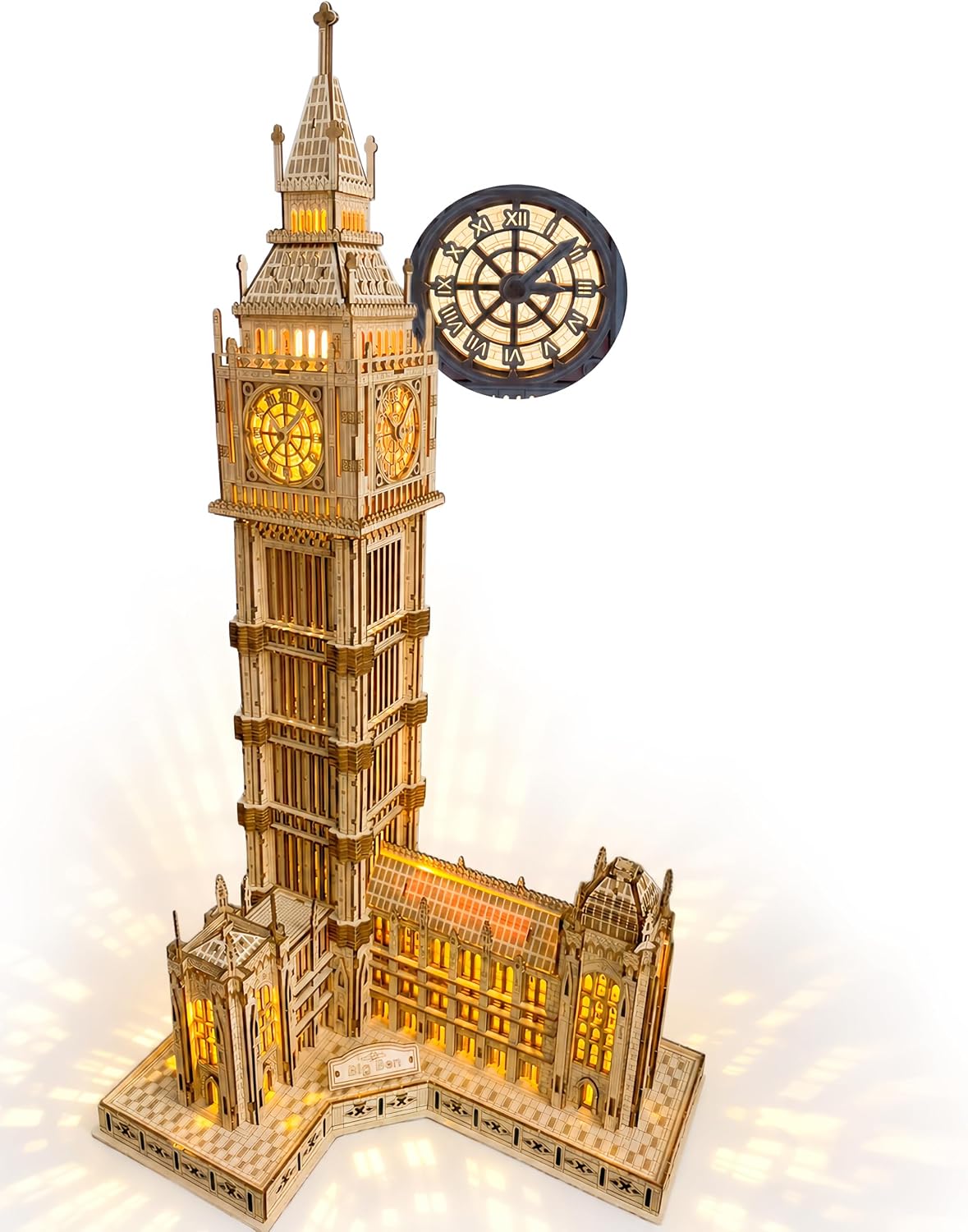
A 3D wooden puzzle can be a quiet evening project, a challenging weekend build, a meaningful gift or a display object that changes the feeling of a room. Its value comes from the relationship between the process and the result: the attention you give each piece, and the small world that remains when you are finished.
This guide will help you choose thoughtfully, whether you are buying your first model, selecting a gift, or finding the next addition to a growing collection.

1. Start with the time you want to spend
Piece count is a useful starting point because it suggests the scale of the project. It should not be treated as a simple measure of difficulty. Large pieces, repeated structures and a clear sequence may make a higher-count model feel approachable; small decorative layers can make a smaller model feel more involved.
Instead of asking what is the biggest puzzle you can finish, ask what kind of experience you want:
- A few focused hours: choose a compact scene or a design with a moderate piece count.
- A slow weekend project: choose a model with layers, rooms, façades or moving elements to discover over time.
- A longer creative ritual: choose a landmark or detailed fantasy setting that invites you back for several sessions.
Astshun&co’s Winter Cabin has 198 pieces, while the Fantasy Castle has 433 pieces and the Big Ben Clock Tower has 595 pieces. Each offers a different rhythm rather than a simple ladder of easy to hard.
2. Look closely at material and finish
Wood is part of the sensory pleasure of a 3D puzzle. It gives the builder a tactile surface, visible grain and a sense of substance that paper or plastic cannot duplicate. Still, not every wooden kit is made or finished in the same way, so read the product page before choosing.
Look for clear information about the material, pre-cut construction, surface finish and any additional components. Consider whether the model uses lighting, acrylic scenery, moving mechanisms or other features, and check what is included. A thoughtful listing explains the practical details so the builder can prepare the right space and tools before beginning.
Also consider the finished palette. Natural wood, painted details and transparent accents all influence where a completed model will feel at home: a warm shelf, a modern desk, a reading corner or a display cabinet.
3. Choose a design that means something
The most satisfying model is often not the most complicated one. It is the one you want to keep looking at. A building, ship, cabin or imagined place becomes more engaging when it connects to an interest, a trip, a memory or a world you would like to visit.
Architecture for detail seekers
Landmark models reward the builder who enjoys proportion, windows, roofs and the way a recognizable structure gradually appears. An architectural model such as Big Ben can bring a favorite city or a love of design into the building experience.
Fantasy for imagination
Fantasy models give design permission to be playful: impossible towers, glowing windows, hidden rooms and theatrical color. The Fantasy Castle is a strong choice for someone who wants the finished object to feel like a story rather than a replica.
Cabins and coastal scenes for atmosphere
A cabin, beach house or seaside scene may speak through mood more than architecture. These designs are well suited to people who value calm, warmth, travel memories or a small decorative escape from the everyday.
Before you choose, ask one simple question: What story will this model tell once it is on the shelf?
4. Consider the finished model as part of your space
A 3D wooden puzzle deserves to be chosen as both an activity and an object. Think about where it will live after the build. Measure a shelf or desk, look at the room’s lighting and decide whether the model should blend in quietly or become a focal point.
Display
Architectural landmarks and mechanical models often work well on desks, bookcases and display cabinets because their silhouette remains interesting from a distance. Miniature scenes reward closer viewing and feel especially at home on a side table or dedicated shelf.
LED lighting and atmosphere
Lighting can change a model’s role after dark. In a cabin or fantasy build, illuminated windows reveal depth and create a gentle focal point in a reading corner, bedroom or study. Check each product listing for the exact lighting method and power requirements.
A personal keepsake
The finished model carries the memory of the build. That is what makes it different from a ready-made decoration: every connection and adjustment has become part of the object’s story.
5. Choose a puzzle as a gift
A 3D wooden puzzle can be an unusually generous gift because it gives twice: first as time spent making, then as something to keep. The best choice is guided by the recipient rather than a generic age or occasion.
- Choose a landmark for a traveler, architecture lover or city enthusiast.
- Choose a fantasy world for someone drawn to stories, games or magical décor.
- Choose a cabin or coastal scene for a person who values cozy spaces, holidays or travel memories.
- Choose a mechanical model for someone who enjoys movement, engineering and visible mechanisms.
For birthdays, holidays, housewarmings and milestones, include a note about why you chose that particular world. The personal connection makes the building process feel intentional from the first piece.
6. Choose the experience, not only the object
At Astshun&co, we focus on 3D wooden puzzles because building with your hands gives time a different texture. The goal is not to race to the finished photo. It is to notice how the structure grows, enjoy the small moments of progress and feel the satisfaction of a scene becoming real.
Our designs draw from architecture, magical settings and fantasy worlds because those subjects offer details worth returning to. We want the final model to be beautiful enough to display, but we also want the hours spent making it to feel worthwhile: focused, imaginative and quietly rewarding.
Choose the model whose material, scale, story and finished atmosphere you will enjoy most. Then make room for the process. The result is more than a puzzle—it is a beautiful time you made for yourself.
Frequently asked questions
How many pieces should a first 3D wooden puzzle have?
Choose a piece count that fits the time and attention you want to give the project. A smaller model can offer a satisfying weekend build, while a larger model rewards a more deliberate, multi-session experience.
Are 3D wooden puzzles good gifts?
Yes. They offer both the building experience and a finished object to display. Choose a theme that connects with the recipient’s interests or a shared memory.
What makes a finished wooden puzzle worth displaying?
A model earns its place on a shelf when its scale, theme, detail and optional features such as lighting fit the surrounding room and continue to reward a closer look.