
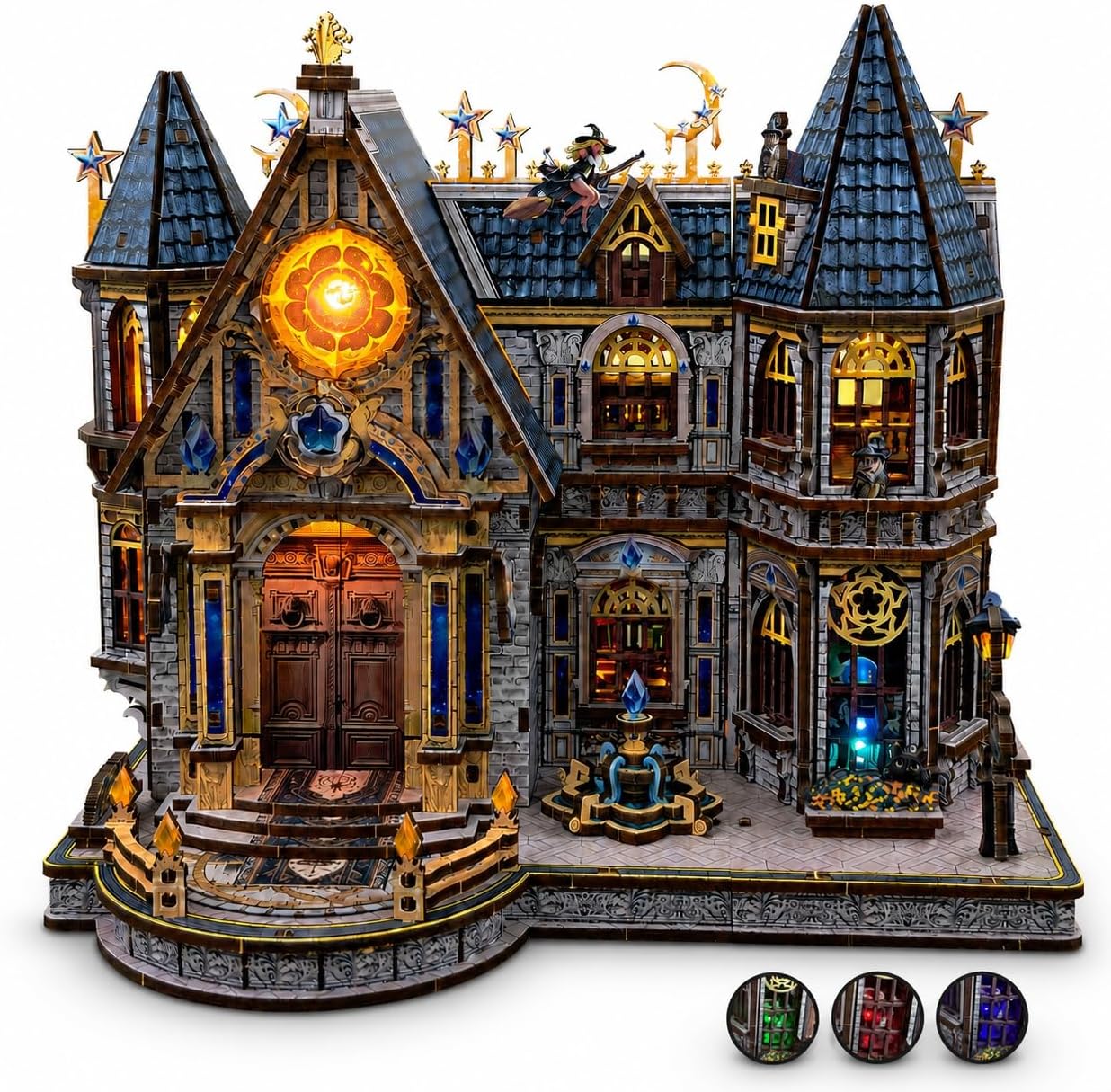
Building a 3D wooden puzzle can turn a quiet holiday afternoon into a shared, screen-free activity. Instead of trying to finish the entire model in one sitting, choose a kit that suits the group, organize the pieces by instruction step and give each person a clear role. The result is both time spent together and a finished model that remembers the occasion.
This guide is written for adults, couples and families with older builders who can safely handle small, delicate parts. Always follow the age guidance, safety information and assembly instructions supplied with the individual model.
Why build a wooden model during the holidays?
Holiday schedules often include meals, travel and time spent looking at separate screens. A building project creates a shared focus without requiring constant conversation or competition. People can participate at different speeds while working toward one visible result.
A 3D wooden puzzle works particularly well because the project changes throughout the session. Flat wooden sheets become a foundation, walls, mechanisms and decorative details. Each completed section gives the group a natural moment to pause and see progress.
The activity can suit:
- a couple looking for a quiet evening project;
- adult relatives spending an afternoon together;
- friends who enjoy crafts or models;
- an older child building with close adult supervision when the product age guidance allows it;
- a solo builder who wants a calm holiday ritual.
The goal is not speed. A careful session that completes one section can be more enjoyable than rushing toward the final step.
How do you choose a 3D puzzle for a shared holiday activity?
Choose according to the people at the table, not the number of people in the room.
Match the model to the group’s interests
A shared subject gives everyone a reason to care about the finished piece. The Winter Cabin fits a cozy seasonal mood. The Fantasy Castle suits a group that enjoys imaginative worlds. The Big Ben Clock Tower offers a recognizable architectural project, while the Paddle Steamer adds a mechanical feature for builders interested in motion.
Consider how easily the work can be divided
House and landmark models often contain sections that can be prepared separately before the instructions bring them together. Mechanical models require more attention to sequence because one reversed or tight part can affect movement later.
Do not split the instructions into unrelated tasks unless the manual clearly supports it. One person should keep track of the current step while others locate parts or prepare the next numbered sheet.
Choose a realistic session length
A large model does not need to be completed during one gathering. Decide whether the activity is:
- a one-hour introduction;
- a relaxed afternoon with breaks;
- an evening project continued over several days;
- a holiday tradition that returns each year.
Our guide to how long 3D wooden puzzles take explains why piece size, repeated details, lighting and moving parts matter as much as total piece count.
What roles can people take while building together?
A small group works best when each person has a useful job and everyone can see the instructions.
| Role | Main task | Why it helps |
|---|---|---|
| Step reader | Reads the current diagram and checks orientation | Keeps the group in sequence |
| Part finder | Locates numbered pieces while they remain in the sheets | Reduces confusion and lost parts |
| Builder | Removes and fits the current components | Maintains consistent pressure |
| Checker | Compares the assembly with the next diagram | Catches reversed parts early |
| Lighting or mechanism tester | Tests the feature at the instructed stage | Finds issues before access is closed |
Rotate roles between sections so that the project remains shared. One experienced builder should not silently take over every delicate step. Instead, explain why a tab needs support or why an axle must turn freely.
For a couple, combine the roles: one person reads and finds pieces while the other assembles, then switch after a major section. Our Valentine's Day wooden puzzle date-night guide shows how to turn that shared build into an unhurried evening.
How should you prepare the holiday building table?
Clear the table before opening the kit. Food, drinks, wrapping materials and loose decorations can hide small parts or expose wood to moisture.
Prepare:
- The instruction manual in a position everyone can see.
- The numbered wooden sheets, arranged in order.
- A shallow tray for pieces required by the current step.
- A separate container for useful offcuts and loose parts.
- Bright, even lighting.
- Enough space to rotate the model without touching delicate details.
Keep most pieces in their sheets until the instructions call for them. This preserves the numbering system and protects narrow tabs. The full method is covered in how to organize 3D wooden puzzle pieces.
If the model includes LEDs or moving components, keep batteries, wiring and accessories grouped separately and test them only at the stage described in the manual.
How do you keep a shared build calm and enjoyable?
Agree on three simple rules before starting.
Read the next step before removing parts
A picture may show the finished orientation more clearly than the current connection. Reading ahead by one diagram can prevent mirrored parts from being reversed.
Never force a connection
If a tab does not fit, stop and check the part number, direction and previous assembly. Excess pressure can crack a narrow piece or distort a moving section. Our guide to fixing a broken wooden puzzle piece is useful if damage occurs, but prevention is easier.
Pause at a natural milestone
Finish a wall, floor, roof section or mechanism before stopping. Place the unfinished model and remaining sheets somewhere protected, and mark the current instruction step. This makes it easier to return after dinner, travel or another holiday event.
Which Astshun&co models create different shared experiences?
Winter Cabin: a cozy seasonal build
The 198-piece Winter Cabin 3D Wooden Puzzle combines a snowy exterior, an opening roof and warm LED lighting. The finished scene fits naturally into a winter display, while the illuminated interior gives the group a clear final reveal.
It is a useful choice for builders who are drawn to atmosphere and miniature rooms rather than mechanical movement.
Fantasy Castle: an imaginative group project
The 433-piece Fantasy Castle offers layered architecture, a rotating section and multicolor lighting. It suits a longer holiday project for people who enjoy fantasy details and a dramatic finished model.
Because there are more parts and features to track, appointing one person to follow the instruction sequence is especially useful.
Big Ben: a patient architectural project
The 595-piece Big Ben Clock Tower rewards builders who enjoy repeated architectural details and recognizable landmarks. It can be continued over several holiday sessions rather than treated as a single-day challenge.
A project like this works well when family members are visiting for several days and want a shared object to return to between other plans.
Paddle Steamer: a lesson in movement
The 319-piece Paddle Steamer uses a manual axle and moving paddle wheels. It encourages the group to think about alignment and friction, making the final motion part of the shared reward.
This model is a good fit for adults who enjoy seeing how a construction works, not only how it looks.
Can a holiday build become a tradition?
Yes. Photograph the flat sheets before the first step, one or two milestones and the completed model. Keep the focus on the people and the process rather than producing perfect social media images.
You can also write the year and builders’ names on a removable card placed beside the finished model. When the model returns to a shelf each holiday season, it recalls the afternoon or evenings spent making it.
Astshun&co’s brand idea is that every builder brings their own time, patience and memories to a model. A shared holiday build expresses that idea naturally: the object matters because of the experience attached to it.
Explore the Astshun&co 3D wooden puzzle collection to compare lighted houses, fantasy models, landmarks, mechanisms and wooden sculptures.
Frequently asked questions
Are 3D wooden puzzles suitable for a family holiday activity?
They can be, when the product’s age guidance is followed and adults supervise younger participants closely. Small parts and delicate connections require an organized workspace and careful handling.
Can several people work on one 3D wooden puzzle?
Yes. Assign roles such as instruction reader, part finder, builder and checker. Follow the assembly sequence and avoid creating separate sections unless the manual clearly allows it.
Do we need to finish the model in one day?
No. Stop after a complete section, protect the unfinished model and mark the current instruction step. Many builders enjoy returning to a larger project over several sessions.
Which model is best for a cozy Christmas activity?
A lighted miniature house such as the Winter Cabin creates a seasonal atmosphere. The best choice still depends on the group’s experience, interests and available time.
What should we do if a piece will not fit?
Check the part number, orientation and previous step. Do not force it. Support the surrounding wood and follow the kit instructions for any adjustment.