
Wooden model kits for adults turn flat, precision-cut sheets into a freestanding object. Depending on the design, the finished result may be a miniature house, an architectural landmark, a mechanical model or a sculptural puzzle. The right kit is one you will enjoy building at a calm pace and still want to display afterward.
Choosing well is less about finding the highest piece count and more about matching the project to your interests, workspace and available time. This guide explains the practical differences between popular wooden model kit styles and the questions worth asking before you begin.
What are wooden model kits for adults?
Adult wooden model kits are build-it-yourself projects made from cut wooden parts, usually joined through tabs and slots. They are related to 3D wooden puzzles because the assembly sequence and interlocking pieces gradually create a three-dimensional form. Some emphasize a scenic, decorative result; others emphasize structure or movement.
The term can cover several build experiences:
- Miniature house kits that create rooms, scenery and often LED atmosphere.
- Architectural kits that build a recognizable landmark or fantasy structure.
- Mechanical wooden models that use moving wheels, axles or other visible action.
- Puzzle sculptures that turn geometric forms into display objects.
Each starts with flat components, but the finished purpose differs. That is why the subject and feature set should guide the choice.
How do you choose a wooden model kit for adults?
Start with the finished object
Picture where the completed model will go. A warm miniature house can suit a bookcase or desk; a landmark can become a centerpiece; a mechanical model invites occasional interaction; a sculpture may work as a gift for a sports or design fan. A kit is easier to finish when the builder has a reason to look forward to that result.
Match the level of detail to your time
Piece count helps estimate the amount of handling, but it cannot tell the whole story. Fine railings, tiny room details, electrical features and mechanisms may slow a build more than repeated panels do. Give yourself a clean, well-lit workspace and treat a longer kit as a sequence of sessions instead of a single task.
| Build priority | A useful kit style | What to compare |
|---|---|---|
| Relaxing decorative project | LED miniature house | Interior detail, lighting and display size |
| Recognizable structure | Architectural model | Layer count, silhouette and fine façade pieces |
| Hands-on movement | Mechanical model | Test points, moving feature and small components |
| Distinctive finished object | Geometric sculpture | Subject, wood contrast and stand or base |
Our article on how long 3D wooden puzzles take gives a practical way to plan a project around real free time.
Compare three examples before choosing
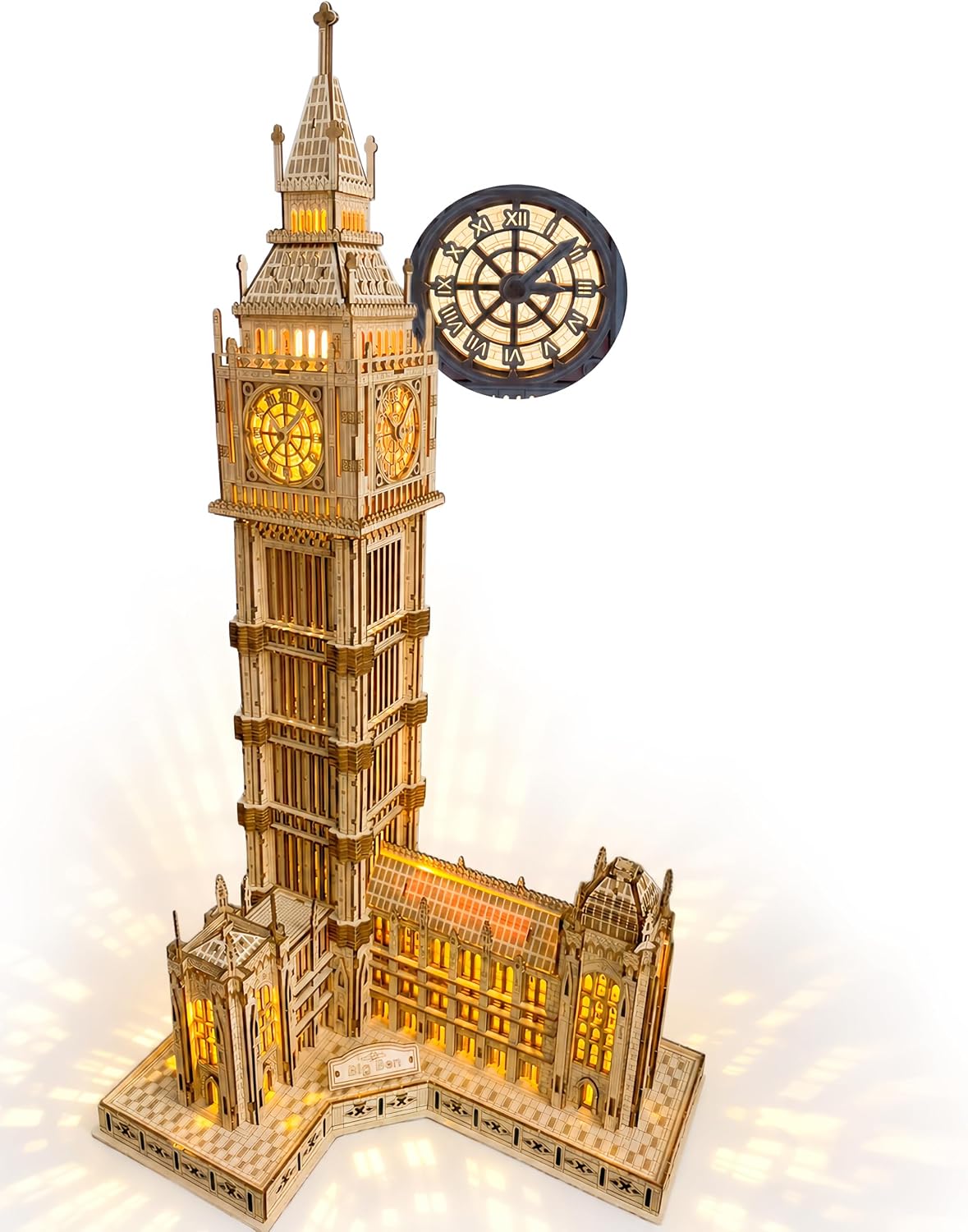
The Winter Cabin has 198 pieces, warm LED lighting and an opening roof; choose it for a snowy miniature scene. The Paddle Steamer has 319 pieces and a manual axle that turns its paddle wheels; consider it if a moving mechanism interests you. The Big Ben Clock Tower has 595 pieces and warm lighting; its tall landmark form suits someone interested in architecture.
Piece count alone does not determine difficulty or build time. Compare the model's assembled dimensions, the type of detail you enjoy and the power or mechanism requirements shown in its current listing.
Are wooden model kits suitable for beginners?
Yes. A beginner does not need to begin with the smallest possible kit; they need a clear instruction sequence and a subject that keeps them interested. Choose an approachable model, read the full instruction booklet before releasing pieces and stop when a joint feels unexpectedly tight.
Successful first builds tend to share a few habits: parts stay in their labeled sheets until needed, the builder checks orientation before pressing a joint and special features are tested before they become enclosed. These habits reduce avoidable breakage without requiring specialist tools.
Read our beginner’s guide for a first-build checklist and our assembly guide for the step-by-step process.
What is the difference between a wooden model kit and a jigsaw puzzle?
A traditional jigsaw puzzle creates a flat picture from pieces that interlock at the edges. A wooden model kit creates a standing object from parts that have specific orientations, tabs and slots. The building rhythm is different: instead of searching mainly by color and image, you follow a diagram and see the structure gain height, layers and function.
That difference also changes what happens after the build. A jigsaw is often packed away or framed; a wooden model is usually displayed. See our full comparison of 3D wooden puzzles and jigsaw puzzles for the trade-offs in space, time and challenge.
Should you choose a lighted, mechanical or architectural kit?
Choose an LED wooden house for atmosphere
Lighted house kits are suited to builders who like miniature scenes and a cozy finished display. The Winter Cabin is an example of a 198-piece model with LED light and an opening roof. Lighting makes the build feel different after dark, but it also means following wire-routing and testing instructions at the proper stages.
Choose a mechanical wooden model for interaction
Mechanical kits make the construction logic visible after completion. A manual axle or moving wheel can reward a builder who likes troubleshooting and precise alignment. The Paddle Steamer uses a manual axle and paddle wheels; read the mechanical model guide if motion is the main appeal.
Choose an architectural model for structure and presence
Landmarks and castles emphasize layers, rooflines and façades. They suit builders who enjoy observing a recognizable shape emerge from flat pieces and want a display model with visual presence. Consider the finished footprint before choosing one for a smaller desk or shelf.
What tools and setup do you need?
Most wooden model kits are designed to be built with the included pieces and instructions. The best setup is simple: a level surface, good light, room for the instruction booklet and a small tray for tiny parts. Tweezers or a fine emery board may help with certain steps, but only use tools or materials that match the specific kit’s guidance.
Avoid forcing a tab when the fit feels wrong. Check the part number, orientation and slot first. If a correctly identified tab is unusually tight, make only a minimal adjustment if the instructions permit it. For broken or loose pieces, use the advice in our wooden puzzle repair guide.
How should you display and care for a finished wooden model?
Place the finished model on a stable surface away from persistent moisture and strong direct sunlight. Dust it with a soft, dry brush, especially around railings, joints and moving parts. For illuminated models, keep the specified power components accessible and use the directions supplied with the kit. For a room-by-room display plan, see our care guide.
Browse 3D wooden puzzles for adults to compare illuminated houses, architecture, mechanical builds and sculptures in one place.
Frequently asked questions
Are wooden model kits only for experienced hobbyists?
No. Adults new to model building can start with a manageable project, follow the instructions in order and work in short sessions. Interest in the subject is often the best motivation.
Do wooden model kits need glue?
Many use press-fit joints and do not need glue for ordinary assembly. Follow the individual kit instructions, especially around moving features or repairs.
How long does a wooden model kit take to make?
Time varies with piece count, detail, lighting, moving parts and your pace. Plan several relaxed sessions for a detailed model rather than rushing the final result.
What makes a wooden model kit a good adult gift?
Choose a subject the recipient will enjoy displaying, a build scale that fits their time and features such as lighting or movement that match their interests.