
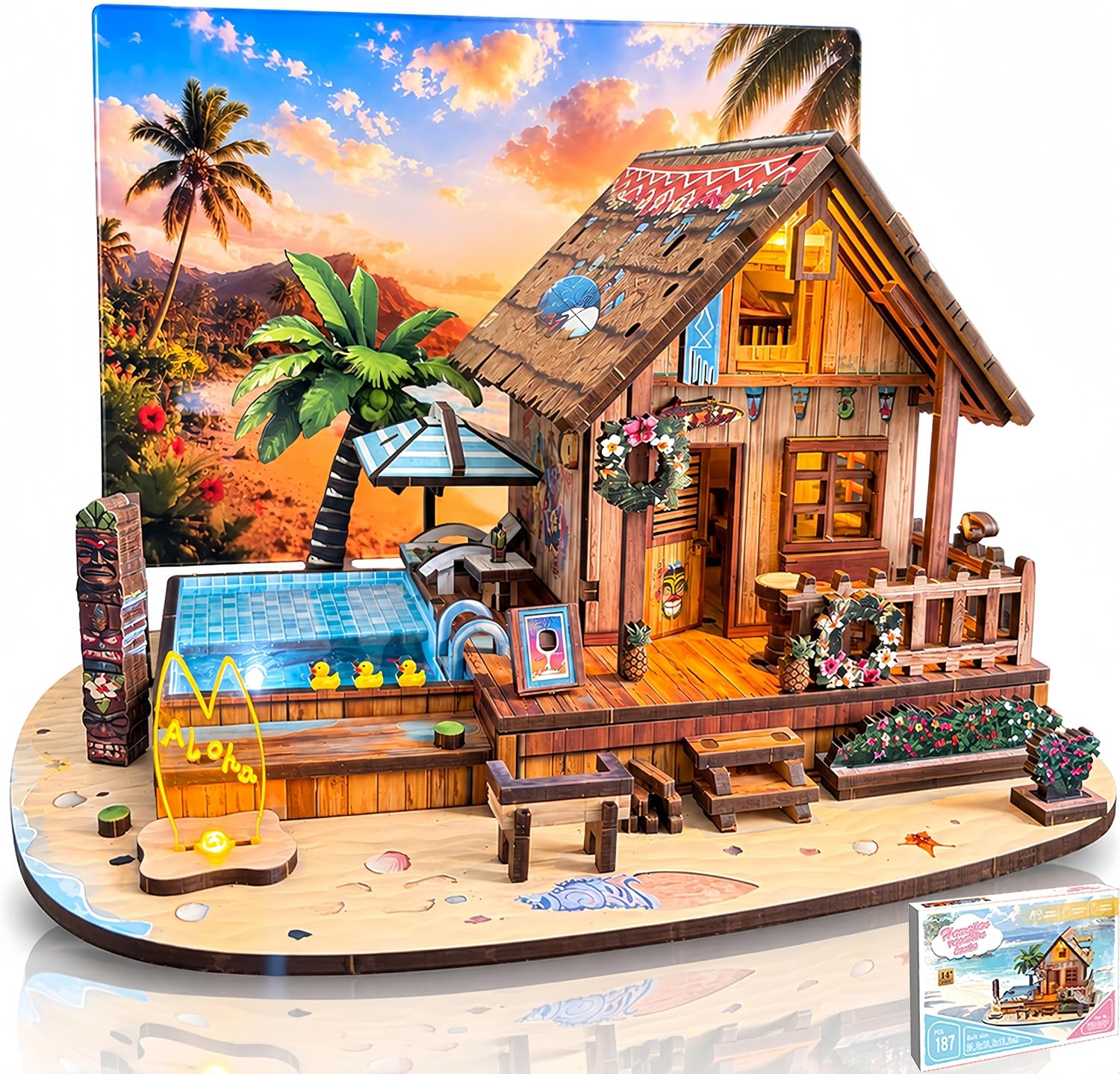
A 3D wooden puzzle can be a Valentine's Day date-night activity if both people enjoy making things together. Pick a model connected to a shared interest, set up a clear table, and plan to build only a manageable section rather than finishing by a deadline. One person can read the instructions and find numbered pieces while the other assembles; switch roles as the model takes shape. The point is time spent together, not proving how quickly you can complete a kit.
This guide is about planning a shared evening, not choosing a generic romantic gift. The kit can be opened on Valentine's Day and finished another weekend. If your partner would rather have a ready-made present or does not enjoy careful assembly, choose a different activity. For a broader look at occasions and recipient interests, see our gift guide for miniature lovers.
Is a wooden puzzle a good date-night activity for both people?
It works best when the two of you can enjoy a project with a sequence of small tasks. A 3D model gives you something concrete to do together: identify parts, follow a diagram, solve a fit question and see a structure emerge. It also gives you an easy reason to pause, talk about the scene and return later. You do not have to be equally experienced. A confident builder can explain an unfamiliar step while the other person manages the sheet inventory, lighting instructions or next section.
That does not mean every couple will like it. If one person would be doing the whole build while the other waits, the evening may feel less shared than planned. Ask whether your partner would enjoy assembling a miniature or mechanical model before making the kit a surprise. If they like the finished look but not the process, you could build a model yourself as a personal gift, or choose a different date-night plan.
Keep the expectations modest. A complex build might take several sessions, and piece count alone does not predict how quickly two people can work. Our guide to wooden puzzle build time explains why detail, lighting and experience matter. A date-night plan can be successful even if you complete only the base or one wall.
Which Astshun&co model suits your shared interests?
Start with a subject that already means something to you both. Valentine's Day does not require a heart-shaped model or a red color scheme. A setting can evoke a favorite trip, a book you enjoyed or a place you hope to visit.
| Shared interest | Model to explore | Reason to consider it |
|---|---|---|
| Snowy getaways and cozy interiors | Winter Cabin | A 198-piece cabin with an opening roof and warm LED light |
| Beach travel and tiny rooms | Hawaiian Beach House | Tropical deck, furniture details and a warm LED scene |
| Coastal scenery | Seaside Cabin | Two-level waterfront house and separate acrylic backdrop |
| Architecture and London memories | Big Ben Clock Tower | A 595-piece vertical landmark with warm lighting |
| Fantasy stories | Fantasy Castle | A 433-piece castle with a rotating side and color-changing light |
| Moving mechanisms | Paddle Steamer | A manual axle turns its paddle wheels |
These examples are choices, not a ranking from easiest to hardest. A large structure may have repeated steps that suit a patient pair; a smaller scene may contain tiny decorative work that asks for equal attention. Read the exact product page and manual before deciding who will do which task. The full 3D wooden puzzle collection also includes wooden soccer-ball sculptures if the person you are planning for prefers geometric objects to miniature houses.
If the setting is the main attraction, compare the 3D wooden house styles. If one of you loves mechanisms and the other loves lighting, our mechanical versus LED puzzle guide may help you choose a project both will want to display afterward.
How do you prepare a relaxed build for two?
Clear a stable table with enough space for the numbered sheets, manual, parts tray and growing model. Put a shallow container nearby for pieces that detach early and another for small accessories. Keep unused parts in their sheets until the instructions call for them. Our piece-organization guide explains why sorting every piece into a pile can make a 3D build harder.
Agree on a stopping point before starting. It could be the end of an instruction section, a completed base or the next stable subassembly. Give yourselves enough light to read the part numbers and see the joints. Keep drinks away from wooden sheets and electrical components. If the kit uses LEDs, follow its specified testing and power sequence instead of treating the lighting as the last-minute finale.
Make room for conversation. A quiet playlist or a snack can be part of the evening, but do not crowd the work area with food, candles or decorations that could tip onto the model. The appeal is watching a small scene grow while you work together. Astshun&co's story describes each person as a unique star and each model as a world built piece by piece; for a couple, the same build can carry two sets of choices and memories.
How can two people share the assembly without getting in each other's way?
Divide by activity, not by assigning one person permanent control of the model. At the start of a section, one person can read ahead and locate numbered pieces while the other checks orientation and fits the current connection. Trade places at the next section. For repeated windows or railings, each person can prepare a small set while the other verifies placement against the diagram.
Pause when the instructions require delicate pressure or wiring. Two hands on the same thin part can make alignment worse. Let one person handle the connection while the other steadies the main base if the manual makes that safe. If a tab resists, stop to check the part number, direction and slot rather than competing to push harder. Our how-to-build guide offers a step-by-step approach, and the broken-piece guide covers what to do if a part is damaged.
Take a photograph when you stop. It shows the progress you made together and helps you find the next step later. Keep the manual with the remaining sheets and place any loose parts in a labeled container. The unfinished model should stay on a stable surface where it will not be handled accidentally. You can return to it on a weekend without recreating the whole setup from memory.
What should you do with the finished model afterward?
Decide together where it will live. A finished house, castle or landmark can become a reminder of the evening because you can see the work in it. Measure the shelf before making that decision, especially for a tall tower or a model with an opening roof or backdrop. The display and care guide covers clearance, dust and lighting access.
For a Valentine gift, you could write the date and a short note on a separate card rather than altering the wooden parts. If you later move the model, support its base and protect loose details as described in our moving guide. The best keepsake is one that still fits your home and that you both enjoyed making.
Frequently asked questions
Do we need to finish the puzzle on Valentine's Day?
No. Choose a comfortable stopping point and continue another day. A multi-session build can be more enjoyable than rushing through delicate steps to meet a date-night deadline.
What if one person has never built a 3D wooden puzzle?
Choose a subject they like, read the instructions together and trade simple roles such as finding pieces and checking orientation. The beginner guide helps you compare a first project without relying on piece count alone.
Is an LED miniature house a romantic gift?
It can be a personal gift if the setting connects with the recipient's interests and they enjoy building. Warm light does not make a kit universally romantic. Ask whether they want the hands-on project as well as the finished scene.
Can two people build the same model at once?
Yes, if you coordinate around the manual and avoid pulling a delicate connection in different directions. One person can prepare the next step while the other assembles; switch roles regularly so both participate.